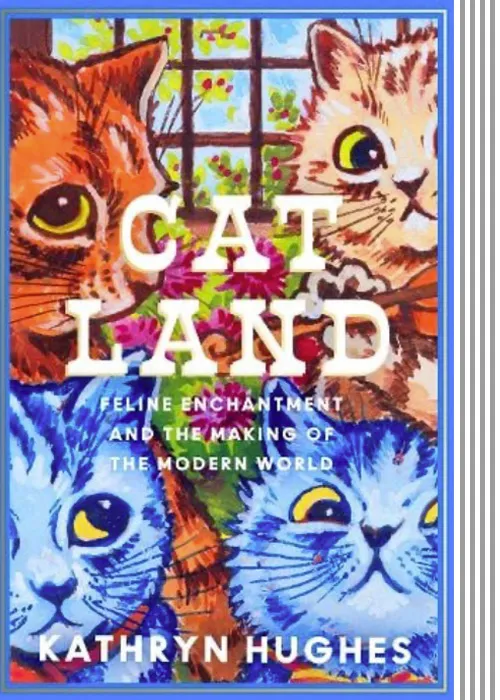
The year is 1900 and Britain is in the grip of a cat craze. Duchesses are smuggling exquisite Siamese, working men are competing for prizes for the fattest tabby, single ladies are making a fortune from breeding Blue Persians. In households up and down the country, an animal that had been regarded as a servant or urban nuisance for centuries is transforming into a cherished pet and much-loved family member. Wherever you look, old social hierarchies are breaking down.
In Catland, Kathryn Hughes chronicles the cat craze through the life and times of the commercial artist Louis Wain. Wain’s anthropomorphic drawings of cats in top hats falling in love, sipping champagne, golfing, driving cars, and piloting planes are some of the most instantly recognizable images from that era. In the process they offer a sly commentary on the restless and risky culture of the very human post-Victorian world. And no-one experienced these uncertainties more acutely than Wain himself, a chaotic genius who spent the last decades of his life as a pauper in a mental asylum, producing kaleidoscopic feline portraits which today sell for thousands.
Beautifully illustrated and based on new archival findings about Wain’s life, the wider cat fancy, and the media frenzy it created, Catland chronicles the fascinating story of how the modern cat emerged.