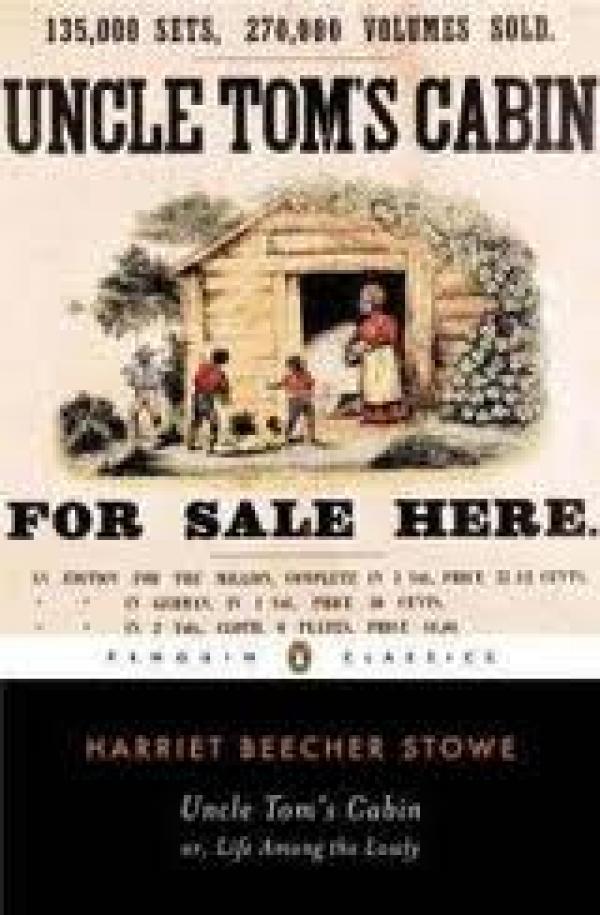
When Harriet Beecher-Stowe published Uncle Tom's Cabin in 1852 it sold more copies than any book before, other than the Bible. It became a significant catalyst in the social movements of the time: abolition of slavery, and States' rights. It could be argued that her book was a major cause of the Civil War and Emancipation Proclamation. That's one powerful book--especially for fiction
A notorious anecdote about "Uncle Tom's Cabin" relates that Abraham Lincoln, upon greeting Harriet Beecher Stowe at a White House reception, jokingly referred to her as the lady who wrote the book that started the Civil War. Sardonic as it is, the implication does some basis; appearing in 1852, eleven years before the Emancipation Proclamation, this novel forcefully decrying the institution of slavery and helping to stir the nation towards abolition was probably the most incendiary of the century. That it is often crude and quaintly primitive compared to contemporaneous works by Hawthorne and Melville only seems to increase the sense of its mission, oddly enough
While the book was intended as an illustration of the evils of slavery, it ends up as more--specifically a study in racism with the conclusion that prejudice comes in infinite degrees. Even Harriet herself was prejudice. She occasionally takes the unorthodox approach of interrupting her narrative to preach to the reader, clearly stating her opinion that Blacks were a "degraded race," but still worthy of humane treatment. As she wends her way through the story and reveals her large and varied cast of characters, she exposes the many forms of discrimination, some more forgiving than her own.
She portrays her hero, the old slave, Uncle Tom, as a likeable, caring, Christian man deserving compassion and freedom. She unwittingly coined the Uncle Tom cliché, that of a complacent and passive black man resigned to his low station in life, kowtowing to white men. But she also delivers us the more savory George Harris, a hot-blooded and intelligent young slave willing to die for his freedom, a man with true "American" virtue. She introduces the reprehensible slave traders and run-away trackers, the brutal plantation owners, Southern apologists and sympathizers, Northern indignation and apathy, and the only color-blind people in her book, the helpful Quakers on the Underground Railway. Most important, she shows the tragic result of slave child ripped from mother, and husband from wife to be "sold down river." A century and a half later, it's hard to imagine how this could happen.
Uncle Tom's Cabin is a prime example of the power of the written word. It divided a nation and changed an institution. Its message remains relevant even today, and still manages to ignite passions. Beyond all that, it's actually one heck of an entertaining story. --Christopher Bonn Jonnes, author of Wake Up Dead
.....I think Uncle Tom's Cabin is one of the best books ever written. It's a shame that this book isn't as popular any more.....
•
•
•
•
•
•
•
•
•
•
•
•
•••
•••
•••
•••
•••
•••
•••
•••
•••
•••
•••
•••
•••
•••
•••
•••
•••
•••